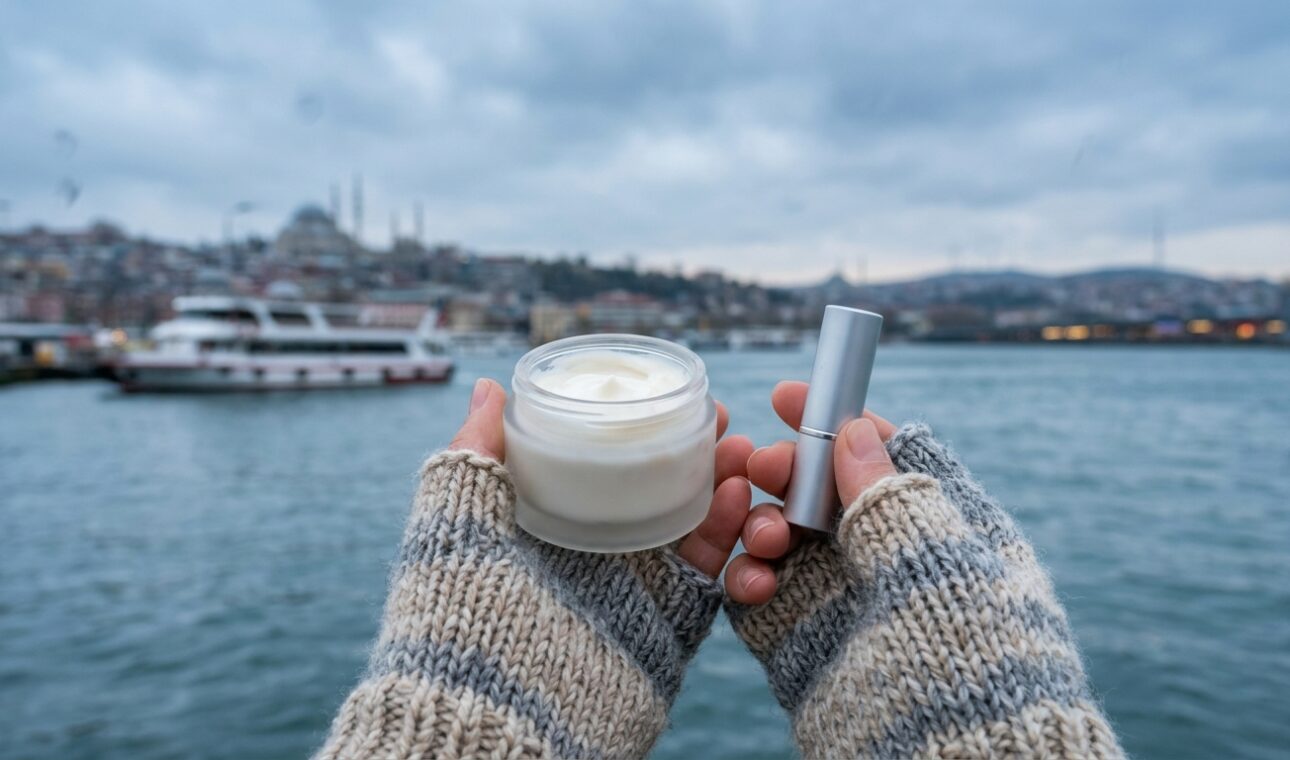
Why Does Skin Get Dry in Winter?
Skin gets dry in winter because cold air outside and heated air inside both pull moisture from it. The outer layer of the skin, the skin barrier, loses water faster than it can replace it. The result is tightness, flaking, dullness and sometimes redness or itching.
Istanbul winters bring their own mix: cold, windy days by the water, damp grey weather, and long hours indoors with radiators or air conditioning on heat. Moving between cold streets and warm rooms many times a day is hard on the skin, especially on the cheeks, lips and hands.
The good news is that winter dryness usually responds well to a few simple changes in your routine.
How Indoor Heating and Cold Wind Affect Your Skin
Indoor heating lowers the humidity in a room. Dry indoor air draws water from the skin all day, which is why skin can feel tight by the evening even if you hardly went outside.
Cold wind strips away the skin’s natural oils and can cause redness and irritation, particularly on exposed areas. Sudden temperature changes also make small blood vessels widen and narrow, which can bring out redness in sensitive skin and people with rosacea.
Hot showers feel good in winter but remove protective oils, leaving the skin drier afterwards.
A Simple Winter Skin Care Routine
You don’t need many products. A gentle, consistent routine is what helps most:
1. Cleanse gently: use a mild, non-foaming or cream cleanser and lukewarm water instead of hot. 2. Moisturize on damp skin: apply moisturizer within a few minutes of washing to lock in water. Richer creams with ceramides, glycerin or hyaluronic acid help in winter. 3. Protect during the day: wear sunscreen every morning; UV rays still reach the skin on cloudy winter days. 4. Go easy on exfoliation: reduce scrubs and strong acids if your skin feels raw or tight. 5. Look after lips and hands: use a lip balm and hand cream regularly, especially before going outside. 6. Add humidity indoors: a humidifier or a bowl of water near the radiator can make indoor air less dry.
Winter Habits That Make Dryness Worse
Some everyday habits quietly make winter skin drier. Small changes can make a noticeable difference:
- Long, hot showers: keep showers short and lukewarm, and pat your skin dry instead of rubbing.
- Harsh soaps and foaming cleansers: they strip natural oils; switch to a gentle, cream-based cleanser.
- Skipping moisturizer in the morning: cold wind dries unprotected skin quickly, so moisturize before going out.
- Too much exfoliation: scrubs and strong acids can damage an already weak skin barrier.
- Licking dry lips: it makes them drier; use a lip balm instead.
- Not drinking enough water: people often drink less in cold weather, even though indoor heating dries the body too.
- Sitting right next to the radiator: direct heat dries the skin even faster.
If your skin still feels tight and rough after a few weeks of gentler habits, it may need more targeted support.
In-Clinic Treatments That Support Winter Skin
When home care isn’t enough, some treatments can help restore hydration and skin quality. Winter is also a good time for them, as the skin isn’t exposed to strong sun:
- HydraFacial: cleanses and hydrates the skin in one session without downtime.
- Skin boosters: treatments such as Aqua Shine deliver hydrating ingredients into the skin.
- Mesolifting: supports skin quality and glow with tiny injections of nourishing ingredients.
Which option suits you depends on your skin type and concerns, so it’s decided at a consultation.
When Should You See a Doctor?
Most winter dryness improves with gentle care. See a doctor if you notice:
- Dryness that doesn’t improve after a few weeks of good care
- Cracked, bleeding or very itchy skin
- Redness that keeps coming back or spreads, which can be a sign of rosacea or eczema
- Patches that look different from the rest of your skin
A doctor can find out whether it’s simple dryness or a skin condition that needs specific treatment.
Frequently Asked Questions
Why is my face so dry in winter?
Cold air outside and heated air inside both pull water from the skin’s outer layer. Wind and hot showers also strip away natural oils, leaving the skin tight and flaky.
Which moisturizer works well in winter?
There isn’t one product for everyone, but richer creams with ceramides, glycerin or hyaluronic acid usually work well in winter. Apply them on slightly damp skin to hold in moisture.
Do I need sunscreen in winter?
Yes. UV rays reach the skin even on cloudy winter days and can cause dark spots and skin aging. Use sunscreen every morning.
Is a HydraFacial good for winter skin?
A HydraFacial cleanses and hydrates the skin without downtime, so many people find it helpful in winter. Whether it suits you is decided after looking at your skin type and concerns.
Why does my skin get red when I come inside from the cold?
Moving from cold to warm air makes small blood vessels in the skin widen quickly. This is common in sensitive skin and rosacea. If redness keeps coming back, it’s worth seeing a doctor.